
Hairstyling
Hair Brush Guide: Best Hair Brush Types for Every Hair Type
Table of contents:
Let's be honest, most of us grab whatever brush is closest and hope for the best. But here's the thing: the brush you choose (and the styling product you pair it with) can make or break your style. Different hair brush types are engineered for different textures, goals, and techniques. Once you understand which tool works for your hair, getting salon-worthy results becomes a lot more achievable. This guide simplifies the application of each hair brush and pairs them with the right styling product to take your results even further.
Quick overview of hair brushes for different hair types:
Think of your hair brush as a technique, and your styling product as the formula that makes it work. A round brush alone won't give you volume if there's no product prepping the root. A paddle brush won't smooth frizz without the right foundation. The two work together, and knowing which combination suits your hair type is the real secret to consistently great hair days.
If volume is your goal, a round brush is your best friend. Its cylindrical barrel lifts the hair as you blow-dry, creating tension at the root that flat brushes simply can't replicate. The larger the barrel, the more lift and body you get. Work section by section, rolling the brush under each section of hair while directing heat from your dryer downward along the shaft.
To truly amplify the effect, prep damp roots with a volumizing spray before you begin. Apply the product at the root and work it through with your fingers. This will give the brush something to grip, resulting in volume that isn't just visual, but lasts all day. Consider it the foundation your round brush routine has been missing.
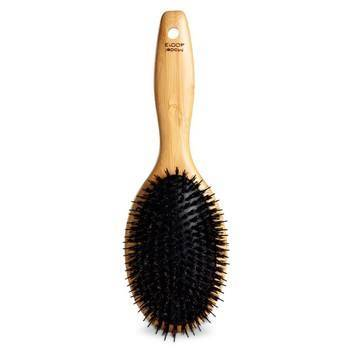
A Boar Bristle Finishing Brush is the go-to for sleek, straight blowouts on medium to long hair. Its wide, flat surface covers more hair per stroke, making it ideal for detangling and smoothing simultaneously. Pair it with a concentrator nozzle on your dryer and work from roots to ends for that polished, bouncy finish.
But the secret to a great blowout isn't just the brush — it's the prep. A blow-dry primer spray with heat protection can cut down drying time while shielding the hair from heat damage. Spritz it through towel-dried hair before reaching for the hair brush, and you'll notice the difference immediately: smoother results, less frizz, and a finish that looks like you just walked out of a salon.
Curly hair and stiff brushes are not friends. The best brush for curly hair is a wide-tooth comb or a finishing brush with widely spaced ionic nylon bristles. This type of brush for curly hair works with the curl pattern rather than against it. Always detangle damp hair, starting from the ends and working your way up to avoid unnecessary breakage.
The game-changer here is what you apply before you comb. An anti-frizz leave-in cream conditions each strand, making detangling significantly easier while reducing frizz and sealing in moisture. Apply it to freshly washed, damp hair and then gently work through with your hair brush for curly hair — your curls will thank you.
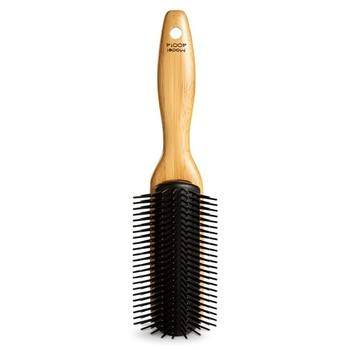
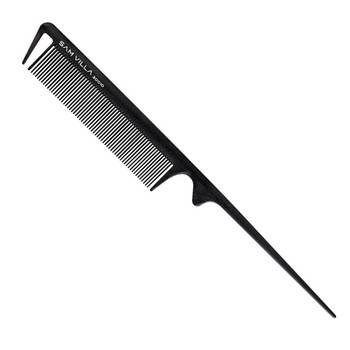
The teasing comb is a specialist tool, and an underrated one at that. Whether you're building height at the crown, creating grip for an updo, or adding structured texture to a style, a teasing comb (especially one with a pointed tail for sectioning) gives you control that no other brush type can. The key is working in small sections and backcombing gently from mid-shaft to root.
To make the texture last, a texture paste can be your ideal partner. Work a small amount through the sections you plan to tease, and the product will hold the hair without making it feel stiff or sticky. The result is textured, touchable, and built to stay.
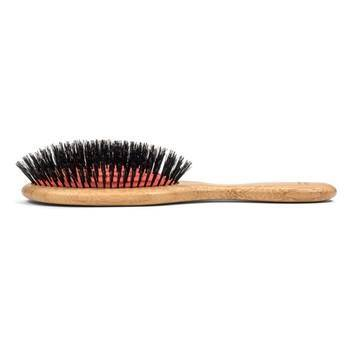
Fine hair needs a gentle touch. A soft-bristle brush — ideally a mixed boar and nylon bristle — distributes natural oils without causing breakage or static. Avoid brushing fine hair when dry if possible; work through it when damp or use a detangling brush to minimise stress on delicate strands.
When it comes to products, fine hair needs volume without weight. A volumizing texture whipcan elevate the results here; its lightweight, whipped texture builds body and movement without dragging hair down. Scrunch it through damp hair before brushing through with your soft-bristle brush for fine hair for a finish that feels full, not heavy.
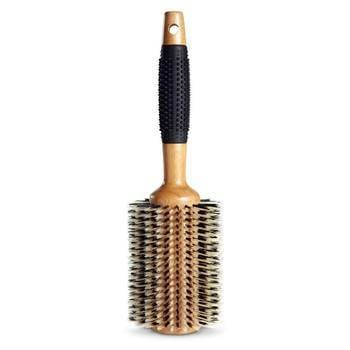
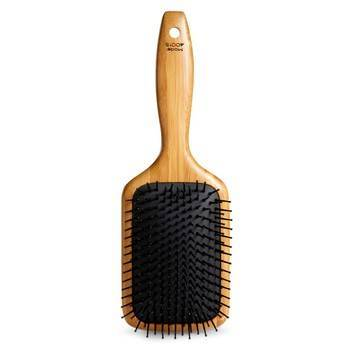
Thick or coarse hair needs a brush that can handle density without snagging. A paddle brush with sparser bristles helps to penetrate the denser strands to remove tangles and add smoothness. It is the ideal brush for thick hair that can also speed up dry time and reduce the effort needed to style high-volume hair. For particularly coarse or resistant textures, a cushion brush with firm nylon bristles also works well.
The best hair brush is only as effective as the technique and products you pair it with. Whether you're chasing volume, smoothness, curl definition, or texture, matching your hair brush type to a targeted styling product is what takes your hair from good to great. It's less about having every tool in the drawer, and more about knowing exactly which combination works for your hair.
Ready to build your perfect styling routine? Explore the full range of styling products at Redken India, where high-performance, science-backed formulas are designed to work for every hair type, every day.
Each hairbrush type is designed with a specific purpose in mind. Round brushes create volume and shape during blow-drying, paddle brushes smooth, detangle, and speed up dry time for thick hair. Teasing combs add lift and grip at the root, while wide-tooth combs and soft-bristle brushes are gentler options suited to curly or fine hair. Knowing what each tool does helps you make smarter choices for your hair goals.
To choose the right brush for your hair, start by identifying your hair type and what you want to achieve. Fine or thin hair calls for soft-bristle brushes that won't cause breakage, while thick or coarse hair needs sturdier options like vent or cushion brushes. Curly hair does best with wide-tooth combs that preserve the curl pattern, and those chasing volume or a blowout finish will get the most out of a round hair brush. When in doubt, match your brush to your primary styling goal.
It depends on the style you're going for. For a sleek, smooth blowout, a boar bristle finishing brush paired with a heat-protective product like a quick blowout primer is the ideal combination. If you want volume and shape, a round brush used while blow-drying will give you the most lift. For texture and updos, a teasing comb gives you the precision and grip needed to build and hold a style in place.
Brushing can help with mild scalp buildup by loosening flakes and improving circulation, but it isn't a treatment for dandruff. Aggressive brushing on an already irritated scalp can actually worsen inflammation and spread flakes further. The more effective approach is to address dandruff at the root with a targeted anti-dandruff shampoo, before incorporating gentle brushing into your routine. Think of brushing as a complement to scalp care, not a substitute for it.
As a general rule, brushing dry hair is safer for most hair types since strands are at their strongest when not saturated with water. Wet hair is more elastic and prone to breakage, especially when pulled with a stiff brush. The exception is curly or highly textured hair, which is best detangled when damp using a wide-tooth comb and a leave-in product for added slip. If you do need to brush wet hair, always start from the ends and work upward gradually.